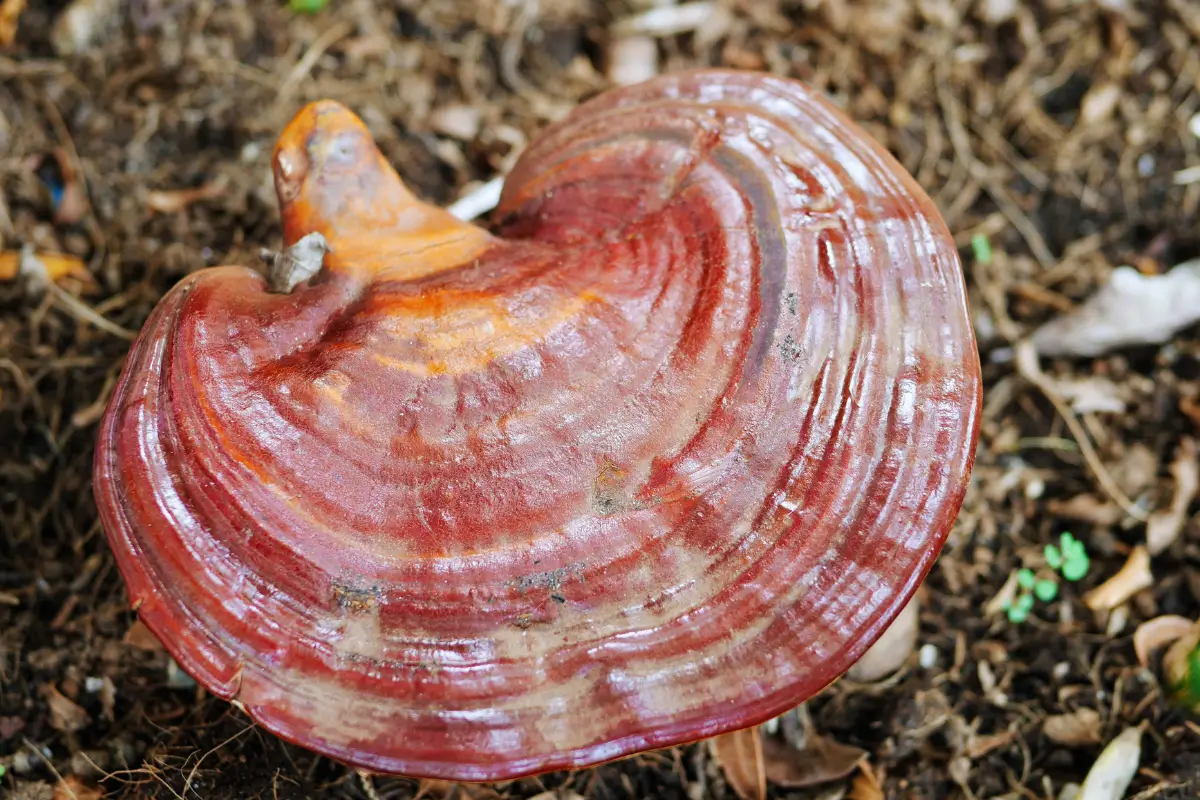
Picture a remedy so precious that for centuries, it was reserved exclusively for the imperial elite — on pain of severe punishment. Nicknamed the "mushroom of immortality", reishi (scientific name: Ganoderma lucidum) is no longer a secret guarded by the mountains of Asia. Today, it stands as the king of adaptogenic mushrooms in the world of natural health and modern mycotherapy.
In a world where chronic stress and immune fatigue have become the norm, reishi offers a fascinating biochemical response. Whether you're looking to improve sleep quality, regulate your cortisol levels or strengthen your natural defences, this complete guide explores both the scientific evidence and the ancestral wisdom behind this extraordinary natural treasure.
Note: In 2026, science confirms what millennia of tradition had already intuited: reishi doesn't simply "boost" the body — it helps it restore its homeostasis (internal balance), acting as a genuine biological thermostat.
History and Origins: From Ancient Tradition to Modern Mycotherapy
Before becoming a fixture on supplement shelves, reishi — known as Lingzhi in China — has traversed the ages as a symbol of longevity and spiritual power.
The "Mushroom of Immortality" in Traditional Chinese Medicine
In ancient texts like the Shennong Ben Cao Jing (the oldest Chinese pharmacopoeia), reishi is classified in the superior category: herbs that can be consumed long-term without side effects and that actively promote life.
Traditionally, it was used to tonify the Qi (vital energy), nourish the heart and calm the mind. It was considered capable of bridging the physical and the spiritual, often associated with divinity and the pursuit of immortality. This historical dimension isn't just a curiosity — it explains why modern research has pursued its unique properties with such enthusiasm.
Scientific Rediscovery: Why Is the Western World Taking Notice?
Reishi has captured the attention of laboratories worldwide because of its molecular complexity. Unlike common mushrooms, reishi is woody and bitter — completely inedible as food. This is where modern mycotherapy steps in.
Through current extraction methods, researchers have identified over 400 bioactive compounds — notably polysaccharides and triterpenes. This transition from ancient mystique to scientific rigour has brought reishi out of traditional herbalists' shops and into cutting-edge formulations aimed at supporting immunity against contemporary stressors.
The Proven Benefits of Reishi: What Science Says in 2026
Let's be honest: if reishi is everywhere today, it's not just for its glossy appearance. It's because it addresses the specific points where modern life hits hardest — stress, fatigue and dysregulated immunity. But unlike a standard vitamin, it doesn't "push" the body — it balances it.
Stress and Anxiety: A Thermostat for Your Cortisol
You know that feeling of being "wired" even when you're exhausted, unable to wind down at bedtime? That's the signature of a cortisol spike that simply won't come down.
Reishi is what's known as an "adaptogen". Practically speaking, it acts as a biological thermostat. If your nervous system is running hot, its active compounds — particularly the triterpenes — help bring it down. It's not a sedative that knocks you out; it's a regulator that quiets mental noise and diffuse anxiety.
Sleep and Serenity: More Than Just a Good Night's Rest
The major advantage of reishi over melatonin or sleep medication is that it works on sleep quality — not forced unconsciousness.
- Reduced latency: falling asleep becomes more peaceful and natural.
- Deeper sleep: studies show improved time spent in deep sleep phases — where the body actually repairs itself.
- Waking without fog: because there's no residual sedative effect, the morning feels genuinely clear.
Immunity and Vitality: The "Modulator" Role
You'll often hear that you need to "boost" your immunity. In reality, an overactive immune system is just as problematic as a weak one — it can trigger allergies, inflammation and autoimmune flares.
Reishi is an immunomodulator. Through its beta-glucans, it essentially "trains" your white blood cells (macrophages and NK cells) to respond proportionately. This is precisely why we included it in the Immu'Boost formula — the idea is not to force your body, but to give it the tools to defend itself intelligently against external threats, particularly during seasonal transitions.
Biochemical Composition: Why Is Reishi So Potent?
If you were to look under the hood of a quality reishi extract, you'd find a natural pharmacy of rare complexity. Two key molecular families explain its effectiveness:
1. Polysaccharides (Beta-glucans): These are the guardians of your immunity. Think of them as a training programme for your defence cells. They're not digested but recognised by specific receptors in your gut, activating a broad protective response.
2. Triterpenes (Ganoderic acids): These are what give reishi its characteristic bitterness. They're the ones working on the nervous system, inflammation and liver protection.
Expert tip: If you buy a reishi supplement and it has no bitter taste, be cautious. The absence of bitterness often signals an absence of triterpenes — and therefore very limited effectiveness on stress and sleep.
How to Choose a Quality Reishi Supplement
Search "buy reishi" online and you'll find everything from €10 powders to premium extracts priced like a fine restaurant. So how do you cut through the noise? Glossy marketing is one thing — what actually matters is what's inside the capsule.
Here are the three non-negotiable criteria:
1. Standardised Extract vs Crude Powder: The Classic Trap
This is the number one mistake. Many brands sell "reishi powder" — the mushroom simply dried and ground. The problem? Reishi is a woody mushroom, as hard as timber. Our digestive system is completely incapable of breaking down its chitin fibres to release the active compounds. You end up swallowing sawdust that passes through almost intact.
For it to work, you need an extract. Extraction (typically hot water or alcohol) "liberates" the active molecules.
The number to remember: A good extract must be standardised — ideally in polysaccharides, or better still, in beta-glucans. If the concentration isn't displayed on the label, walk away.
2. Growing Substrate: Wood, Not Rice!
Reishi grows naturally on decaying tree trunks. It's through "consuming" wood that it develops its triterpenes. Yet to cut costs, many industrial producers grow the mycelium on rice or grain in plastic bags. The result? A product rich in starch (rice sugar) but poor in medicinal actives.
Always look for reishi grown on real wood (typically oak or maple). It takes longer and costs more — but it's the only way to get a mushroom with genuine biological character.
3. Extraction Ratio: Don't Be Dazzled by Big Numbers
Some brands proudly display ratios like "10:1" or "20:1", meaning 10 kg of mushrooms were used to produce 1 kg of extract. It's a useful indicator, but not an absolute proof of quality. What really matters is the final beta-glucan concentration.
A poorly executed 10:1 extract can be less effective than a high-precision 4:1 extract.
Why We Chose This Specific Reishi for Immu'Boost
When developing Immu'Boost, our brief was fairly exacting. We didn't want to simply "add reishi for the label".
- Dual extraction: our process captures both polysaccharides (for immunity) and triterpenes (for the nervous system).
- Full transparency: our extract is standardised — you know exactly what dose of active compounds you're getting with every capsule. No guesswork, no hidden starch.
- Ethics and purity: no pesticides, no heavy metals. Just the raw power of the mushroom, harnessed by science.
This technical rigour is what makes Immu'Boost more than "just another supplement" — it's a genuine health tool for people who take their wellbeing seriously.
How to Run a Successful Reishi Course
Having the best product is one thing. Using it properly is another. Reishi is not a "magic pill" to take now and then — it's a long game for your body.
What's the Ideal Dosage?
For a high-quality standardised extract (like the one in Immu'Boost), the standard dose typically falls between 500 mg and 1,000 mg per day.
- For maintenance: one capsule in the evening is enough to support your nervous system and immunity over time.
- During periods of intense stress or fatigue: you can increase to two capsules, ideally spread across the day.
Morning or Evening?
This is the question that comes up constantly. Unlike cordyceps — which is very energising (morning) — reishi is a calming mushroom.
- For sleep and anxiety: take it 30 to 60 minutes before bed.
- For overall immunity: timing matters less than consistency. Choose a slot you won't forget — with dinner, for example.
How Long Should a Course Last?
The first effects on relaxation can be felt within days. For deeper action on the immune system and stress resilience, we recommend a 3-month course — ideally timed around seasonal transitions (autumn and spring).
Reishi is not merely a relic of the Chinese imperial pharmacopoeia. It's a concrete, biological, scientifically documented response to the challenges of our time. By choosing a quality extract — grown on wood, rich in active compounds — you're giving your body the opportunity to rediscover its natural balance.
Ready to experience the power of the "Mushroom of Immortality"?

Your eyes are exhausted. Your mind won't stop. EyZa™ gives you back the nights you've been missing. • EyZa™
In 15 minutes, EyZa™ dissolves the eye tension and mental overload that keeps you awake, so you can finally sleep like you used to.
Frequently asked questions
What is the difference between reishi powder and reishi extract?
Reishi is a woody mushroom whose cell walls cannot be broken down by human digestion. A crude powder passes through largely intact. An extract — obtained through hot water or alcohol extraction — liberates the active compounds (beta-glucans and triterpenes), making them bioavailable. Always choose a standardised extract with stated beta-glucan content.
Can reishi help with sleep problems?
Yes — reishi is one of the most studied natural compounds for sleep quality improvement. Unlike melatonin or sleep aids, it works by regulating cortisol and supporting GABA activity, improving the quality of deep sleep phases without causing morning grogginess or dependency.
How long does it take for reishi to work?
Initial effects on relaxation and stress can sometimes be felt within days. For meaningful immune support and sustained stress resilience, allow at least 4 to 8 weeks of consistent use. A 3-month course — particularly at seasonal transitions — is recommended for optimal results.